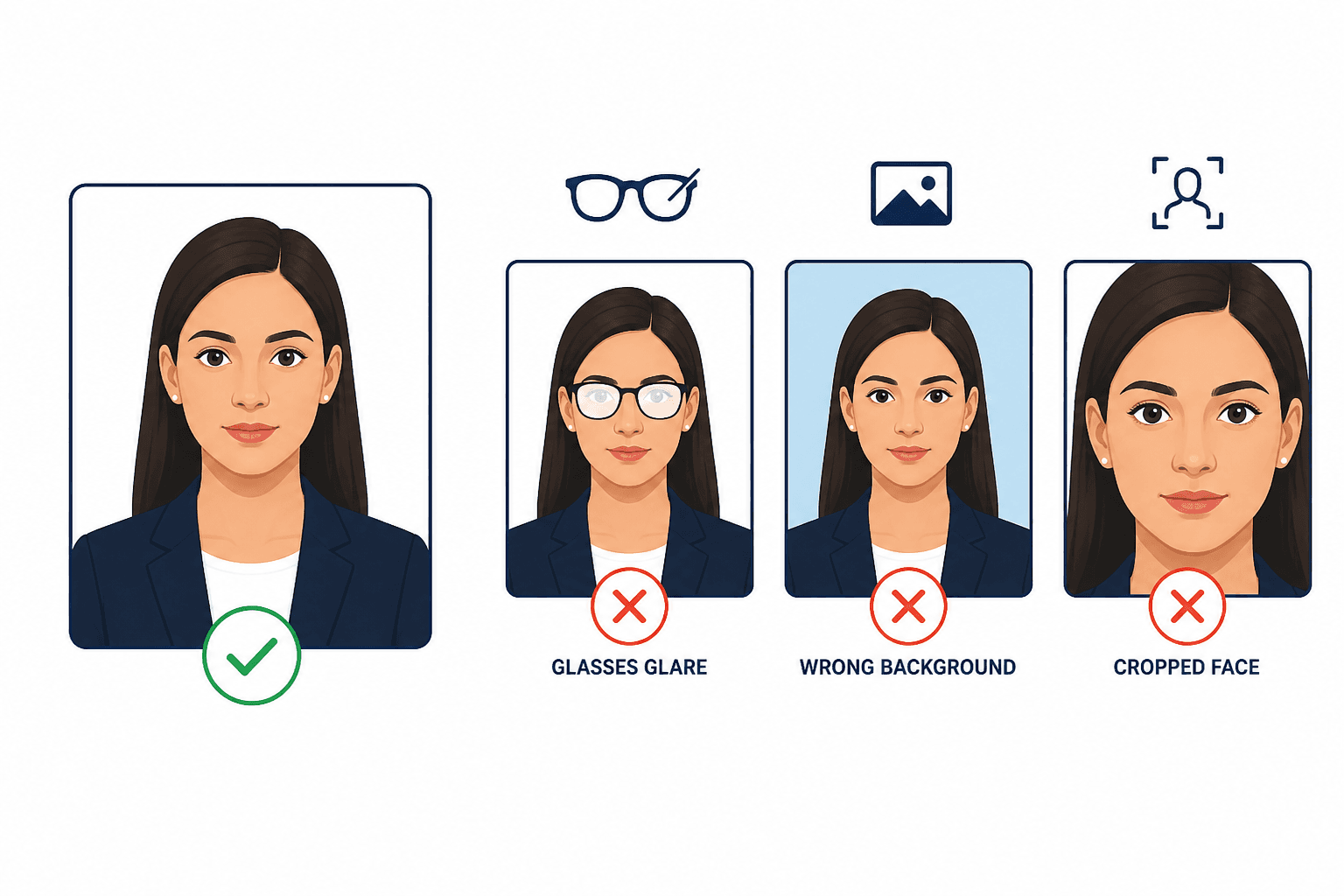
Most passport photo rejections come from a short list of fixable errors. Backgrounds that are not plain white or off-white, shadows on the face, glasses glare, hats, filters, and wrong print size cause clerks to send you back for a new $15 photo before your DS-11 or DS-82 packet moves forward. The State Department wants a plain face-forward shot taken in the last six months. If your hair color or weight changed enough that the photo no longer looks like you, take a new one even if the old print is technically recent.
Photos are not a government fee. They are an estimate of about $15 at many drugstores, big box stores, or studios. That line sits beside the $130 adult book fee and the $35 execution fee on in-person applications. A rejected photo costs another trip and another fifteen dollars. Reading the official photo requirements once before you stand in line saves more time than any filter app.
Key takeaways
- Use a plain white or off-white background with even front lighting and no shadows on the face.
- Print a 2x2 inch square with head height between 1 inch and 1 3/8 inches from chin to top of hair.
- Keep a neutral expression, both eyes open, and no glasses glare or phone beauty filters.
- Take the photo within six months of filing and bring two identical prints to most DS-11 visits.
- DS-82 mail renewal needs one stapled photo in the corner shown on the form.
- Baby photos can show closed eyes but still need a clear face and plain background.
- A rejected photo delays the 6-8 week routine clock until a clerk accepts a new print.
Top rejection reasons at a glance
Acceptance clerks see the same failures every week. The table below maps each mistake to a fix you can apply before you pay for prints. None of these rules are optional because you took the photo at home instead of a studio.
| Mistake | Why it fails | Quick fix |
|---|---|---|
| Busy background | Patterns, door frames, or dark walls show behind you | Stand against a blank white or cream wall with even light |
| Wrong head size | Face too small or too large in the 2x2 inch square | Use a template from the official photo page before printing |
| Glasses glare | Flash reflects off lenses and hides eyes | Tilt frames slightly or remove glasses if vision allows |
| Smile too wide or mouth open | Expression must be neutral with both eyes open | Relax jaw, close mouth, look at the camera |
| Old photo | Image taken more than six months ago or after major appearance change | Schedule a fresh sitting before your appointment |
| Digital filters | Beauty mode smooths skin or changes face shape | Turn off phone portrait filters and HDR face smoothing |
Less common failures include visible headphones, uniforms that resemble law enforcement attire, and teeth showing through an open smile. Red-eye from on-camera flash fails the same way glare does. Retake the frame instead of editing red-eye out in software. Heavy retouching can change skin texture enough that the print no longer matches you at the booth.
Background and lighting errors
The background must be plain white or off-white with no objects visible. A sheet hung on a door works if it is smooth and evenly lit. Standing in front of a window with bright daylight behind you turns your face into a silhouette. Turn so the light hits your face from the front or slight angle instead.
Shadows under the chin or beside the nose fail the same way glare does. They hide features the examiner compares at the border. Drugstore booths exist because the light is controlled. Home photos can pass when you use a timer and check the image at full zoom before you print two identical copies.
Clothing and hair choices that trip people up
- White shirts that blend into a white wall and erase your neckline
- Uniforms that look like official government attire unless worn daily
- Hats or head coverings without a signed religious or medical statement
- Hair covering one eye or casting a hard shadow across the face
- Large headphones or earbuds visible in the frame
Religious head coverings are allowed when your full face is visible from bottom of chin to top of forehead. You may need a signed statement describing the affiliation. Medical head coverings follow similar rules with a doctor's note. Everyday baseball caps are not permitted.
Colored walls photograph gray on phone screens. Do not trust the preview. Step back and look at the raw file on a laptop if possible. A cream sheet pinned flat beats a textured painted wall every time.
Size, cropping, and print rules
US passport photos are 2 inches by 2 inches square. Head height from chin to top of hair must fall between 1 inch and 1 3/8 inches in that square. Most rejection notes mention head size because phone apps crop for Instagram, not for government forms.
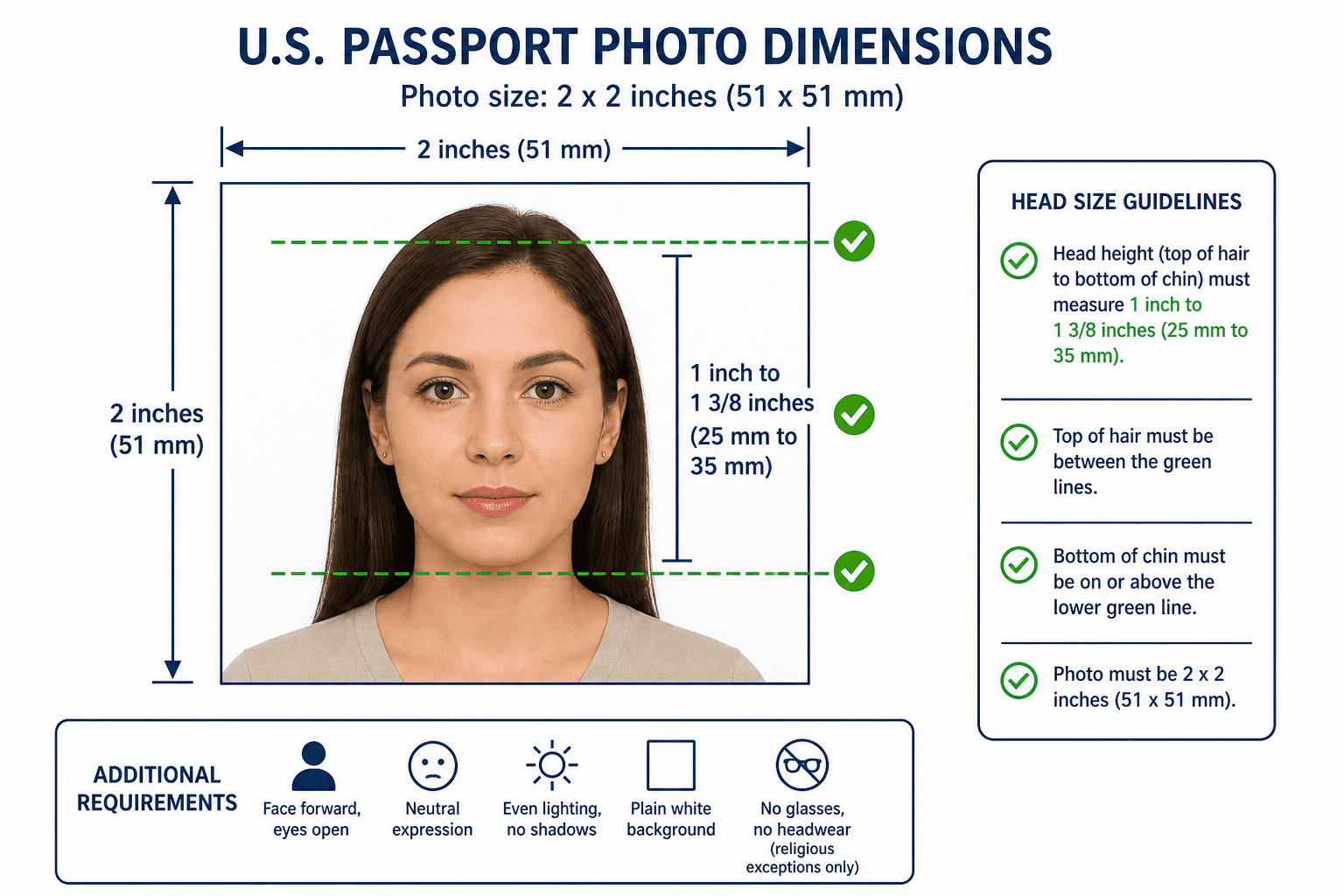
Print on matte or glossy photo paper. Regular printer paper is an instant no. You need two identical prints for DS-11 in most facilities. Mail renewals on DS-82 need one attached photo with staples in the corners as the form shows. Our which passport form you need post explains when you mail photos versus handing them to a clerk.
Digital submissions and online tools
Some renewal portals accept digital uploads that must meet the same pixel and framing rules as paper. Zoomed-in selfies from arm's length rarely match head size specs. If you use an online cropping service, compare the output against the diagrams on travel.state.gov passport photos before you pay for shipping.
Minimum resolution for digital files is 600 by 600 pixels at the final crop. Higher is fine. Saving a tiny thumbnail and upscaling it creates blur that fails at print. Shoot at the highest resolution your camera allows, then crop to the template.
Do not staple through the face on DS-82. Use the corner placement the PDF marks. Tape is not a substitute where staples are required. Clerks remove staples carefully when they scan the file.
Infant and child photo mistakes
Babies do not get a pass on background rules, but they do get practical slack on eyes open. A newborn photo with closed eyes can still pass if the face is sharp and centered. Parents who lay a baby on a white sheet on the floor often get a cleaner shot than they do standing over a car seat.
Adult hands supporting the head must not appear in the frame. Props, pacifiers, and toys need to stay out of the crop. Studios that advertise infant passport photos know these quirks. Our getting a passport for a newborn guide ties photo timing to the DS-11 appointment when both parents must appear with the baby.
- Shoot many frames in good light before the baby gets fussy
- Remove bibs, blankets with logos, and hats unless medically required
- Check that no parent fingers show at the edge of the square
- Print two identical copies for the acceptance facility envelope
Toddlers and older children follow adult expression rules. Bribe with patience, not props. A clerk will reject a photo with a lollipop in frame even if the child looks adorable.
Child passport fees are $100 for the book plus $35 execution on DS-11. The photo estimate of $15 is the same as adults. A retake adds another $15 and another trip with both parents when the child is under 16.
What a bad photo costs you in time and money
A rejected photo at the counter means rescheduling or standing in line again with a new print. On a routine 6-8 week file, losing a week at the front hurts if your flight is already booked. Expedited 2-3 week service still waits on a clerk accepting the image before the $60 expedite clock means much.
Budget about $15 for the first sitting and another $15 if you need a retake. See our passport photo cost guidance and government book fees on the full fee schedule. Photo cost is separate from the $130 adult book, $100 child book, or $30 card add-on. When you add everything for a first-time adult in person, the photo estimate sits next to $130 plus $35 execution before expedite or overnight return at $21.36.
Mail renewal on DS-82 sends the whole packet back if the photo fails review. You lose outbound shipping and days while you reprint and remail. Trackable mail costs add up on a second attempt. Fix the image before the first envelope leaves your house.
Expedite fees are not refunded when a photo rejection delays entry into the queue. You paid $60 for faster production after acceptance. A bad print means production never started on the timeline you expected.
How to get it right the first time
Read the official page once, then have someone else review your image before you print. Ask whether you would recognize yourself at a border booth. If you would hesitate, retake it. Clerks see hundreds of photos a week. They spot shadows and glare faster than you do on a phone screen.
Wear normal street clothes, keep expression neutral, and face the camera directly. Take the photo within six months of filing. Bring two prints to DS-11 appointments even if the website says one, because some facilities still ask for a spare. Staple mail renewal photos exactly where DS-82 shows, not through your face.
Drugstore technicians follow a store template that matches federal rules most days. Ask them to show you the crop before they print. A thirty-second review at the counter beats a second visit.
When your packet is otherwise ready, run the calculate your passport cost tool so the book fee, execution fee, expedite, and photo estimate appear on one screen. Fixing the photo is cheap. Fixing a missed departure is not.
Store digital copies of the approved print. If you lose a physical copy before your appointment, you can reprint identical versions without a new sitting. The file must be unchanged. A new haircut means a new photo.
Frequently asked questions
Can I wear glasses in a passport photo?
Glasses are allowed if lenses are clear and eyes are visible with no glare. Many applicants remove glasses because flash reflection is hard to eliminate at home. Medical glasses you wear daily are fine when the eyes show clearly.
Will CVS or Walgreens passport photos always pass?
Store booths follow the official template, but operator error happens. Check head size and background on the proof sheet before you leave. You are responsible for the final print even when a technician took the picture.
How recent must a passport photo be?
The State Department wants an image taken within six months of filing. Major appearance changes matter more than the calendar. If you dyed your hair or lost significant weight, take a new photo even if the old print is only three months old.
Compare your print against the State Department size and background rules before your appointment. A five-minute check beats a second $15 sitting.
Read official photo requirementsSources and further reading
Official sources
- Passport photos (travel.state.gov)
- Form DS-11 PDF
- Form DS-82 PDF
- Our photo requirements page
- Newborn passport guide
- DS-11 vs DS-82 form guide
Related tools
Related tools on this site
- Passport photo checker: Upload a digital image and see cropping and background flags before you print.
- Photo requirements: Read size, background, and expression rules with official links.
- Passport cost calculator: Add the $15 photo estimate beside book, execution, and expedite fees.